Views: 0 Author: Site Editor Publish Time: 2026-07-22 Origin: Site
Mine managers and executives face a constant operational challenge. You must balance initial capital expenditure against long-term operating margins in tin ore processing. The choice between gravity separation and flotation is critical. It directly dictates the overarching tin ore concentration cost per metric ton (MT). Do not look for a universal "best" method. It simply does not exist. The optimal processing route depends strictly on cassiterite particle size. You must also evaluate gangue mineralogy and regional utility prices.
We strip away marketing hype to focus on financial realities. You will explore how flowsheet decisions impact upfront investment and daily budgets. We teach you to navigate equipment selection objectively. We focus on realistic recovery caps and environmental compliance impacts. This ensures your capital deployment aligns perfectly with the actual metallurgical profile of your deposit. You cannot afford to guess your process methodology. Data must drive every engineering decision you make.
Gravity separation requires significantly lower CAPEX and OPEX but is structurally limited by ore particle size limits and density differentials.
Flotation delivers higher recovery rates for fine tin but introduces steep initial equipment costs and ongoing chemical/power expenses.
True tin mining cost optimization often dictates a hybrid flowsheet, reserving high-cost flotation solely for gravity-circuit tailings.
Vendor evaluation must look beyond base equipment price to include installation footprint, power draw guarantees, and environmental compliance costs.
Define success properly before designing a plant. Plant operators often chase the highest possible recovery rate blindly. This metric alone remains highly misleading. The ultimate benchmark should always be the processing cost per MT of ore. Pushing recovery limits usually requires exponentially higher capital. It also drives up energy consumption rapidly. You must evaluate if the extra recovered cassiterite actually pays for the additional power and reagents. Sometimes, accepting a slightly lower recovery yields better long-term profit margins.
Look closely at upstream variables. Pre-concentration stages consume enormous amounts of energy. Crushing and grinding operations often account for up to 50% of your total plant energy. Your downstream concentration choice dictates the required grind size. Gravity circuits allow for coarser grinding parameters. Coarser grinding saves massive amounts of electricity and reduces steel media wear. Conversely, flotation requires ultra-fine grinding to liberate complex minerals fully. This fine grinding demands heavier mills and higher utility bills. The upstream energy penalty is severe and unavoidable.
Transparency in cost modeling is essential. We base these models on several critical assumptions. Site-specific factors dramatically alter your final expenses. Grid power availability dictates if you need expensive diesel generators onsite. Local water scarcity forces heavy investments in thickeners and filtration equipment. Logistics for reagent delivery can easily double your chemical costs in remote areas. You must plug your localized data into these baseline models. Ignore generalized marketing brochures completely. Rely purely on your specific regional economics.、
Let us analyze the traditional backbone of tin recovery. Gravity separation relies purely on specific gravity differences. Cassiterite has a very high specific gravity. It typically ranges around 6.8 to 7.1. Quartz and other gangue minerals hover around 2.6. This massive density differential makes gravity methods highly effective. It remains the most affordable way to concentrate coarse tin worldwide.
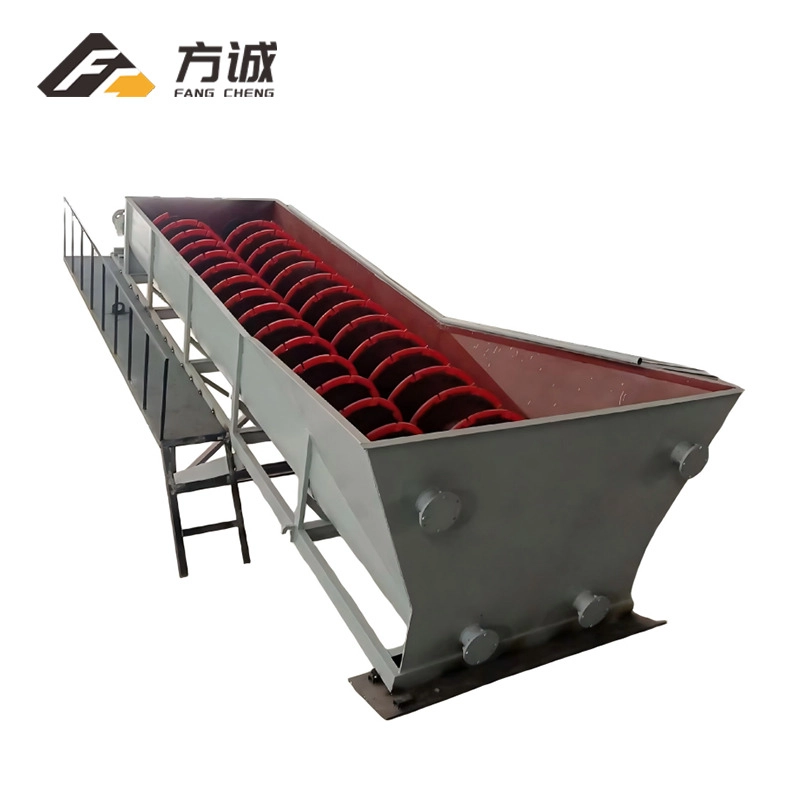
You must understand the equipment cost baseline intimately. Setting up a gravity circuit is relatively inexpensive. Core equipment includes jigs, shaking tables, and a reliable spiral classifier. Jigs handle the coarse pre-concentration efficiently. Shaking tables clean the finer particles effectively. The classifier ensures optimal particle sizing before separation. Below is a structural capex breakdown for a standard gravity setup.
Baseline Capital Allocation for Gravity Circuits
Equipment Category | Percentage of Initial Capital | Primary Function |
|---|---|---|
Jigging Machines | 30% - 40% | Coarse ore roughing |
Shaking Tables | 25% - 35% | Fines cleaning and upgrading |
Classification Units | 15% - 20% | Sizing and dewatering |
Pumps & Ancillary | 10% - 15% | Slurry transport |
Gravity OPEX offers tremendous advantages. You use minimal to zero chemicals daily. The power draw remains exceptionally low across the board. Gravity equipment relies on basic mechanical motion and steady water flow. Furthermore, standard water recycling capabilities are easy to implement. You can recapture most process water using simple settling ponds. This keeps daily operational budgets highly predictable and stable.
However, you must evaluate outcomes realistically. Gravity separation excels when processing coarse-to-medium grains. It fails miserably when processing slimes. Once cassiterite particles drop below 20 microns, gravity recovery plummets rapidly. Water turbulence simply overcomes the natural density differential. You must set realistic expectations for recovery caps. If your ore body is highly disseminated, gravity alone will leave valuable tin stranded in the tailings.
Many modern deposits feature complex, fine-grained, or polymetallic tin ores. These tiny particles routinely escape standard gravity circuits. Flotation becomes an absolute necessity here. It breaks the restrictive 20-micron barrier completely. You can capture ultra-fine cassiterite effectively. This process leverages complex surface chemistry rather than physical density.
The equipment cost baseline shifts dramatically upward. Establishing a flotation circuit demands heavy capital investment upfront. You must purchase expensive flotation cell banks. You also need heavy-duty slurry pumps to handle highly abrasive fine mixtures. Automated dosing systems are mandatory for success. They ensure precise reagent addition constantly. Manual dosing leads to massive chemical waste and poor metallurgical recovery.
The OPEX realities present a significant financial catch. Ongoing operational costs run exceptionally high. You must purchase specialized tin collectors consistently. Hydroxamic acids and phosphonic acids are common but very expensive. You also need quality frothers and pH modifiers. Furthermore, the electrical load is massive. Each cell requires constant, aggressive mechanical agitation. Large blowers must pump air into the slurry continuously. These energy demands will dominate your monthly utility bills.
Environmental and compliance costs add another heavy layer of expense. Reagent storage requires reinforced, spill-proof infrastructure immediately. Safe tailings disposal becomes highly regulated by authorities. You cannot simply dump chemical-laden water anywhere. Wastewater treatment facilities must meet strict international mining standards. These auxiliary systems often cost as much as the main process equipment itself. Do not ignore these hidden environmental expenditures during your initial feasibility phase.
You need a rigid comparative framework to guide your investment. Ore characteristics directly dictate the required processing tier.
Tier 1: High-Grade, Coarse Ore. This scenario is heavily weighted toward gravity separation. It guarantees the absolute lowest cost per MT. Flotation is entirely unnecessary and wasteful here.
Tier 2: Disseminated, Fine Ore. This profile strictly requires flotation. The higher processing cost per MT is easily justified. The massive increase in recovery yield offsets the steep operating expenses.
Tier 3: Complex Ores. These deposits demand a hybrid approach. You perform gravity roughing first. This removes coarse tin cheaply. You follow up with flotation scavenging. This captures the fine tin escaping the primary circuit.
ROI assessment requires strict mathematics. Calculate the payback period meticulously. Compare the exact capital cost of your proposed equipment. Weigh this figure against the projected value of the recovered fine tin. Calculate the tin volume gravity would otherwise lose forever. If the extra recovered tin pays for the flotation circuit within two years, the investment makes sense. If payback stretches beyond five years, reconsider your flowsheet entirely. Controlling overall tin mining cost relies entirely on this ruthless financial logic.
Scalability is another crucial metric you must evaluate. Compare the physical footprint of different systems carefully. Shaking table decks consume massive amounts of floor space. Expanding a gravity plant requires large new buildings and extensive concrete work. Vertical flotation cells offer a much tighter footprint. You can arrange them compactly. When planning for future plant expansion, footprint directly impacts structural engineering costs.
Execution realities often ruin well-planned budgets. A common pitfall is under-engineering water recovery in gravity circuits. Insufficient water treatment leads to muddy process water quickly. Muddy water destroys the specific gravity differential. Your recovery will plummet overnight. Another frequent mistake is underestimating reagent consumption in flotation. Laboratory chemical rates rarely match full-scale production. Always budget a strict 20% contingency for reagent usage.
Pilot testing is absolutely mandatory. Never finalize a CAPEX decision without rigorous testing. Conduct extensive bench-scale trials first. Follow these up with continuous pilot plant runs. You must use representative core samples from your specific deposit. Using generic historical data guarantees catastrophic failure. Real-world metallurgical variations will expose flaws in your initial assumptions quickly.
Vendor evaluation requires strict discipline from your procurement team. Advise your purchasing managers to demand specifics from EPC contractors. Follow this numbered checklist during procurement to protect your investment:
Demand transparent equipment warranties covering all high-wear parts.
Require guaranteed power draw metrics written directly into the contract.
Request modular design options to reduce installation downtime significantly.
Insist on local spare parts availability to prevent extended mechanical shutdowns.
Look well beyond the base sticker price. A cheap machine featuring poor power efficiency costs significantly more in the long run. Evaluate vendors based on lifecycle reliability and proven field performance.
Controlling tin concentration expenses requires strict alignment. You must match the metallurgical reality of your ore body with a pragmatic capital budget. Chasing fine tin recovery blindly often destroys plant profitability. Evaluate your particle size distribution honestly before spending money on unnecessary equipment.
Remember hybrid systems usually win. They offer the most reliable risk-adjusted returns in the industry. You capture coarse tin cheaply using gravity methods. You spend heavily on flotation only where absolutely necessary. This balanced approach protects your profit margins heavily against unpredictable metal price fluctuations.
Take immediate action on your upcoming project. Encourage project engineers to mandate detailed mineralogical reports immediately. Do this before drawing any flowsheets. Request comparative feasibility studies from multiple equipment manufacturers. Let empirical data dictate your final process selection.
A: Flotation OPEX is generally two to four times higher per MT than gravity separation. This steep increase stems primarily from expensive chemical reagents, specialized collectors, and the high electrical load required for mechanical agitation. Exact figures will vary based on your local grid power costs and water availability.
A: Below 20 to 30 microns, gravity recovery drops sharply. Fine cassiterite particles fail to settle fast enough against process water turbulence. At this threshold, the cost-benefit analysis shifts heavily in favor of introducing a flotation circuit to prevent severe metal losses in the tailings.
A: It plays a crucial role in affordable pre-classification. It prevents over-grinding by returning coarse material to the mill efficiently. This reduces the total volume of slurry sent to expensive downstream separation stages, allowing you to build a smaller, more cost-effective gravity plant footprint.