Views: 0 Author: Site Editor Publish Time: 2026-09-09 Origin: Site
Modern mining operations face a central dilemma every day. Optimizing a plant for high-volume coarse gold recovery often results in disaster for smaller particles. Operators end up blowing fine and micron gold directly out the tailings. This oversight leaves significant revenue completely on the table. You simply cannot afford to ignore these heavy losses. Maximizing yield requires a highly calibrated, mathematically balanced approach to gravity separation. You cannot rely on a single "silver bullet" machine to catch everything.
Heavy gravel requires aggressive water flow to move. Meanwhile, tiny gold flakes need gentle capture mechanisms to settle. Bridging this mechanical gap requires strategic planning. You must implement a hybrid classification and recovery circuit. This specific flowsheet captures the full spectrum of particle sizes. Furthermore, it ensures you maintain highly profitable throughput levels. In the following sections, we will explore exactly how to build this system.
Operators constantly battle a defining business problem. You want to move dirt fast. High tonnage directly equals high potential revenue. However, moving material quickly often ruins your recovery efficiency. Processing massive volumes usually means missing 100-mesh or smaller gold. Conversely, catching microscopic gold slows down overall processing drastically. You must find the optimal middle ground.
Particle mass interacts heavily against water velocity. Heavy gravel requires high water velocity to wash it away. This high velocity clears out barren waste effectively. However, it also creates aggressive, turbulent forces. These chaotic forces easily wash away delicate fine gold flakes. Coarse gold settles perfectly well in rough water. Fine gold never gets the chance to sink to the matting.
Relying solely on traditional, single-stage setups damages profitability. Modern placer gold mining sites frequently report a 15-30% loss of total recoverable gold. This lost material mostly consists of fine and flake forms. Ignoring this basic physics problem effectively throws money away. You must implement advanced, multi-stage recovery systems to stop this bleeding.
Every successful circuit begins right here. A robust placer gold wash plant forms the absolute bedrock of the operation. You cannot recover unliberated minerals. Trommels and vibrating screens must break apart raw dirt completely. The material must wash clean before it ever hits a recovery surface.
Sticky clay poses a massive threat to your yields. You must use strong scrubbers and high-pressure spray bars. Unbroken clay balls act exactly like sponges. They lock up both coarse and fine gold tightly inside. These dense balls then carry your precious metals straight to the tailings pile.
Gravity separation follows a strict physical rule. Closely sized feed always yields the highest recovery rates. You must group particles strictly by size. Screening out oversized gravels (+1/2 inch) is completely mandatory. This crucial step prevents severe disruptions in downstream equipment. Large rocks will violently scour your sluice mats. They will destroy any chance of trapping fine flakes.
Pay close attention to your water pressure. A wash plant lacking sufficient pressure will fail immediately. Low residence time inside the trommel also guarantees poor washing. These mechanical failures instantly bottleneck all subsequent recovery stages. If you do not wash the dirt properly, the entire plant suffers.
Coarse recovery needs a reliable, high-volume workhorse. We introduce the modern placer gold sluice for this exact purpose. It handles massive amounts of classified material seamlessly. It captures large nuggets and coarse flakes effortlessly. Sluices process high tonnage while requiring minimal moving parts.
You must select your internal profiles carefully. Traditional Hungarian riffles excel at stopping larger nuggets. They create deep, aggressive vortexes in the water. Conversely, expanded metal placed over miners' moss targets medium-to-coarse capture. The moss provides tiny hiding spots for smaller pieces.
You must dial in the correct operating pitch. Sluice angle and water velocity completely determine your success. These factors create highly specific hydraulic jumps behind each riffle. Proper tuning traps gold securely under the flow. Poor tuning simply scours out already trapped gold.
You must maintain realistic expectations here. Sluice boxes possess strict inherent physical limits. Efficiency drops dramatically as gold falls below 50-100 mesh. Tiny flakes ride the turbulent water straight out the back. You must bypass undersized material to a secondary circuit. Never force a high-volume sluice to catch micron dust.
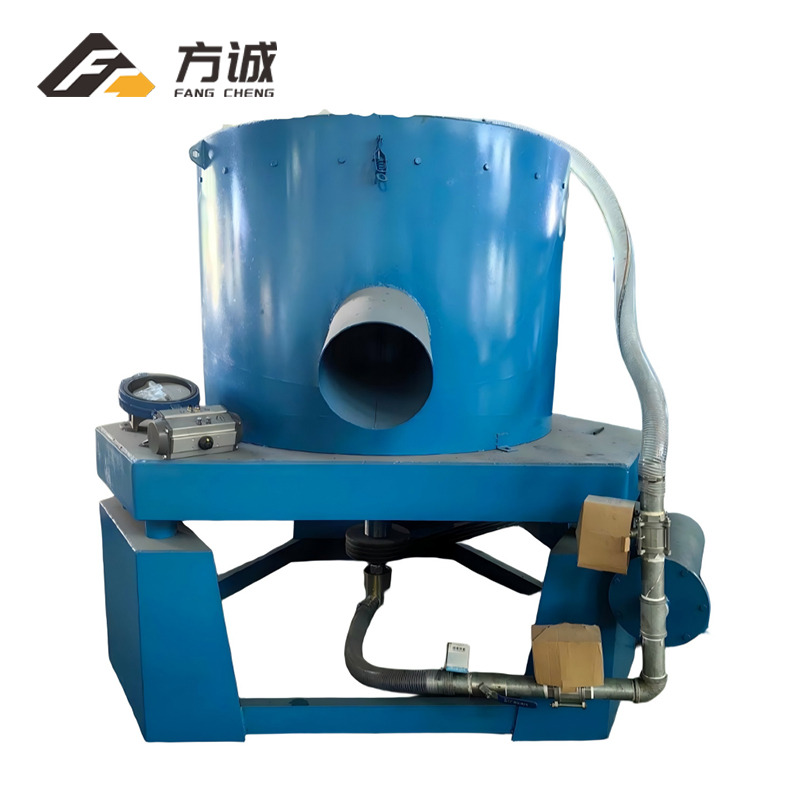
Secondary recovery steps in where sluices inevitably fail. You must integrate a fine gold concentrator into the flowsheet. These specialized machines utilize immense centrifugal force. Knelson or Falcon type bowls spin at incredibly high speeds. They grab what gravity alone misses entirely.
Standard gravity proves too weak for microscopic dust. Centrifugal bowls apply extreme G-force (up to 60-200Gs). This applied force artificially magnifies specific gravity differences. The microscopic gold suddenly feels incredibly heavy. It easily separates from heavy black sands under these conditions.
Strict feeding rules apply to these machines. You must feed only pre-screened material into the bowl. Everything must remain strictly undersized (typically -2mm). Coarse rocks will destroy the polyurethane bowl immediately.
You face a strict requirement for fluidization water. This demands clean, highly pressurized water. Water shoots through tiny holes inside the spinning bowl. This mechanism keeps the material bed loose and active. Dirty water will plug these holes very fast. Plugged holes halt recovery completely.
Consider your feed grade carefully when selecting models. Batch units require periodic stopping to flush out concentrates. Automated purge cycles work best for continuous operations. Automation saves manual labor and ensures consistent security.
The final step requires extreme precision and patience. Position the gold shaking table as your ultimate finishing tool. This equipment handles final upgrading duties perfectly. It turns raw concentrates into ready capital.
You collect heavy black sand concentrates daily. Sluices and centrifugal bowls produce these dense concentrates. A shaking table takes this raw, mixed material. It meticulously separates the final waste from the precious metal. The end result is a highly pure, directly smeltable product.
This method offers incredible advantages. It eliminates hazardous chemicals completely from your site. You avoid dangerous cyanide or mercury usage entirely. It produces immediate, highly visible results right on the deck. It remains incredibly efficient for separating fine gold from lead or iron.
However, it does carry operational risks. It processes very low throughput volumes. Do not ever feed it raw dirt. It demands a highly skilled operator. You must adjust the tilt, water flow, and stroke length perfectly. Small errors wash pure gold straight into the middlings bucket.
Building a successful plant requires systemic thinking. You must follow a site-specific decision framework. Geology dictates equipment. Never buy machinery before you understand your dirt.
Do not guess your ground conditions. We urge operators to conduct proper bulk sampling first. You must perform sieve analysis before buying anything. Knowing your exact coarse-to-fine ratio dictates everything. It directly guides your entire capital allocation strategy.
Assess your site water availability honestly. Wash plants require massive GPM (gallons per minute). Concentrators also demand significant clean water pressure. You must evaluate the absolute need for settling ponds. Water recycling systems often become mandatory in dry regions.
| Equipment Type | Ideal Feed Size | Primary Target | Water Requirement |
|---|---|---|---|
| Rotary Trommel | Raw Bank Run | Washing / Sizing | Very High |
| Sluice Box | -1/2 inch | Coarse Nuggets | High |
| Centrifugal Bowl | -2 mm | Fine / Micron | Medium (Clean) |
| Shaking Table | Concentrates | Final Cleaning | Low (Controlled) |
Buyers must look for specific manufacturing traits. Find companies offering modular, highly scalable systems. Avoid buying mismatched, piecemeal components from different eras. Mismatched machinery causes plumbing and flow nightmares. Seamless integration reduces downtime significantly.
Protect your investment properly. We strongly advise consulting a metallurgical engineer. Request a custom flowsheet design immediately. Base this design firmly on your specific site assays. Do not copy another mine blindly just because they operate nearby.
In the world of extraction, choosing between coarse and fine gold recovery represents a false dichotomy. You never have to choose just one. A well-designed circuit protects your ROI entirely. Moving systematically from a wash plant to sluices maximizes yield.
Adding concentrators and shaking tables seals the deal. Proper classification guarantees maximum efficiency across every single deck. Equipment expenditure should directly correlate to the geological realities of your specific claim.
Your action steps are clear. First, test your ground thoroughly with a sieve analysis. Second, map out your total water availability. Finally, build a modular circuit guided by a professional flowsheet. Follow the math, trust the physics, and capture every flake.
A: Fine gold typically falls between -50 and -200 mesh in size. These particles are microscopic and closely resemble dust. Standard gravity systems struggle to catch them. High water velocity in primary sluices creates aggressive turbulence. This turbulence keeps tiny flakes suspended indefinitely. They wash out into the tailings before gravity can pull them down.
A: Yes, but it requires significant operational sacrifices. You must use specialized matting and dramatically lower the water flow. However, this severely reduces your total plant throughput. A slow sluice processes much less dirt per hour. You ultimately lose out on profitable volume just to capture a few tiny flakes.
A: These plants require an extremely high baseline of water usage. Processing massive gravel volumes demands thousands of gallons per minute. Centrifugal concentrators also require continuous, highly pressurized clean fluidization water. You will likely need large settling ponds and robust recycling pumps to maintain continuous daily operations.
A: Yes, it offers a strong return on investment. It saves countless manual labor hours otherwise spent panning. It significantly reduces the volume of heavy concentrates you must ship to refiners. Ultimately, it speeds up your time-to-cash process by delivering a highly pure, directly smeltable product on site.