Views: 0 Author: Site Editor Publish Time: 2026-09-16 Origin: Site
In placer gold mining, homogenous feed is a complete myth. Operators routinely face unpredictable fluctuations in clay content, boulder-to-gravel ratios, and gold particle size distribution. Nature rarely deposits minerals evenly across a single claim. Relying on a rigid, single-stage processing setup introduces immense business risk. You often face devastating losses of fine gold during unexpected clay surges. Conversely, you risk severe mechanical damage when coarse gravel spikes overwhelm the system. A modular, multi-stage processing circuit offers a highly effective solution. Designing your setup around variable feed tolerance empowers you to maintain profitable baseline recovery rates. It also ensures you minimize costly downtime regardless of sudden geological shifts. Read on to discover how to implement scalable stages designed for extreme variability. We will explore practical strategies to optimize your entire recovery process from start to finish.
Geology changes daily on an active mine site. We define "variable feed" as abrupt shifts in ore characteristics. You might encounter sticky alluvial clays one hour. The next hour often brings erratic gravel sizing. Even the specific gravity of gangue minerals fluctuates wildly. These variables severely disrupt standard processing workflows.
The cost of inflexibility is incredibly steep. Without adaptive stages, operators lose money rapidly. Operators often increase water pressure to break up heavy clay. Excess water pressure unfortunately washes fine gold directly into the tailings. Conversely, insufficient water leaves recovery systems completely clogged. Equipment downtime quickly destroys your daily production targets.
Decision-makers must rethink their evaluation criteria for modern circuits. You should evaluate equipment based on strict volume tolerance. Adjustability of the water-to-solids ratio is equally critical. Finally, overall circuit modularity determines your long-term success. A rigid plant cannot survive erratic feed. You need a system designed for rapid recalibration. Industry standards dictate incorporating buffer zones between major processing stages. This approach absorbs sudden geological shocks effectively.
Your primary objective here is straightforward. Break down agglomerated clays aggressively. You must also accurately classify oversized materials before they reach the sensitive recovery circuit. Proper preparation sets the foundation for high yields.
Evaluating the core equipment starts by choosing the right placer gold wash plant. Operators typically decide between trommels and rotary scrubbers. Scrubbers excel at handling heavy, sticky clay. Trommels work best for loose, sandy gravels. Selecting the wrong unit cripples your entire operation.
Handling variability requires daily operational adjustments. High-clay feed demands aggressive scrubbing. You also need longer retention times inside the drum. Sandy feed requires rapid throughput to maximize daily volume. Operators must adjust settings continuously.
When selecting a plant, prioritize specific decision factors. Look for units featuring variable speed drives. Adjustable water manifold systems are equally vital. They allow you to adapt immediately to daily feed changes. Flexibility is your best defense against variable ore.
Failing to mitigate preparation risks ruins profitability. If you do not properly liberate gold from clay, you guarantee downstream losses. Clay balls easily carry gold particles straight out to the tailings pond. This renders your expensive fine recovery equipment completely useless.
Once you scrub the ore, primary concentration begins. The main objective is efficiently capturing coarse-to-medium gold. Simultaneously, the system must discharge the bulk of barren gravel and sands. Bulk volume reduction is critical for efficiency.
Deployment and tuning of a placer gold sluice drives this stage. Sluicing remains the most popular method for bulk volume reduction. However, old-school static designs fail under variable conditions. You need highly responsive separation technology.
Implementation realities dictate constant vigilance. Flow rates require dynamic adjustments as slurry density changes. If the feed suddenly becomes heavy with iron sands, traditional riffles quickly pack tight. They become entirely impermeable. This packing causes gold to wash directly over the top.
Evaluate flexible separator transformers and modern chute designs. You need systems allowing for quick riffle or matting swaps. You must base these changes on the day's specific ore characterization. Adaptability prevents massive yield drops.
Risk mitigation focuses on avoiding static sluice setups. Prioritize systems giving operators clear visual access. You must easily monitor and adjust water velocity. This proactive approach prevents valuable gold from migrating into your tailings stream.
Standard sluices inevitably miss the smallest particles. Your objective here is recovering ultra-fine and flake gold. These tiny particles remain suspended in the slurry. They easily escape primary gravity sluicing methods.
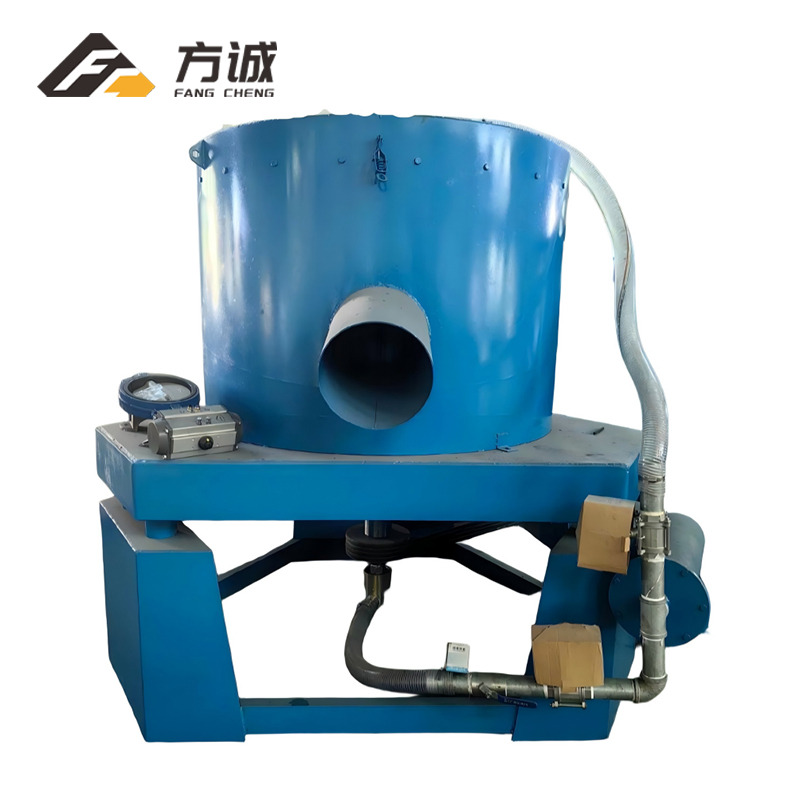
Integrating a fine gold concentrator changes the game entirely. Centrifugal and batch concentrators provide massive advantages for fine particle capture. They target gold sizes previously deemed unrecoverable.
When deposit geology shifts toward finer particle sizes, standard gravity is insufficient. Centrifugal force creates a specialized high-G environment. This intense force pins micron-level particles against the inner bowl ribs. It forces separation based on extreme mass differences.
Assess automation capabilities carefully during procurement. Automated discharge cycles are absolutely critical when feed grades vary. They allow for much more frequent flushing during high-yield surges. You can purge the bowl without stopping the entire wash plant.
Risk mitigation relies heavily on upstream preparation. Fine concentrators require strict feed sizing. Operators usually keep feed under two millimeters. Ensure your classification screens from the earlier stages remain robust. Oversize material entering a centrifuge bowl causes catastrophic mechanical damage.
The final step demands absolute precision. Your objective is separating valuable gold from heavy black sands. These gangue minerals include magnetite and hematite. The primary goal is producing a smelt-ready or highly saleable final product.
Understanding the operational mechanics of a gold shaking table ensures maximum upgrading efficiency. These tables utilize differential asymmetric motion. This specific motion fans out minerals by their exact specific gravity.
Implementation realities are often frustrating. The ratio of heavy minerals to gold will fluctuate constantly. A rigid final recovery stage forces a terrible compromise. You will either lose fine gold or produce a heavily contaminated concentrate.
Shortlist tables based on comprehensive deck adjustability. You need total control over deck tilt, stroke length, and operational speed. The ability to fine-tune wash water and deck motion is non-negotiable. It is the only way to manage variable black sand ratios effectively.
Risk mitigation here centers entirely on flow control. Shaking tables demand a perfectly steady, controlled feed rate to function properly. Operators must implement a surge bin or holding tank prior to this stage. This vital buffer decouples final upgrading from the highly variable throughput of the primary plant.
Building a modern, adaptive circuit requires highly strategic planning. You must evaluate several site-specific constraints before purchasing equipment. A poorly planned layout cripples future scalability.
First, analyze your raw water availability and recycling capacity. Multi-stage systems often demand significant water volumes daily. Next, evaluate your available power infrastructure rigorously. Finally, consider the physical equipment footprint required on your specific terrain. Steep or narrow claims limit equipment spacing options.
Table 1: Core Processing Stages and Primary Objectives
| Processing Stage | Target Material Phase | Primary Risk Addressed |
|---|---|---|
| Feed Preparation | Raw ore, sticky clays, massive boulders | Incomplete liberation causing downstream yield loss |
| Primary Concentration | Coarse to medium gravels and sands | Riffle packing due to sudden heavy mineral surges |
| Fine Gold Recovery | Suspended ultra-fine and flake gold | Loss of micron-level values to the tailings pond |
| Final Upgrading | Concentrated black sands and raw gold | Contaminated final product lowering sale value |
Before finalizing any equipment procurement, operators must take decisive action. Proper due diligence prevents massive operational failures.
Variable feed remains an inherent reality of placer deposits. It is never an anomaly you can safely ignore. Expecting uniform gravel and clay distribution always leads to poor operational planning. Nature dictates the feed parameters.
Relying on a single piece of equipment creates a dangerous single point of failure. Conversely, a staged, modular approach builds a robust engineered safety net. You protect your recovery rates by moving systematically through distinct phases. Effective preparation feeds bulk concentration, which supports fine recovery and precise upgrading.
Decision-makers must prioritize equipment scalability during their final evaluation phase. Insist on rigorous vendor testing capabilities before signing contracts. By embracing a multi-stage, adaptable circuit, you secure consistently high yields despite unpredictable geological shifts.
A: A multi-stage approach ensures different sizes and types of gold receive targeted treatment. Coarse nuggets and micron-fine gold require completely different extraction mechanics. Using specialized equipment for each stage maximizes overall recovery despite constant feed variations. This modular strategy builds a safety net against geological unpredictability.
A: It does not handle clay directly. It relies entirely on the primary wash plant to scrub and liberate the clay first. If raw clay enters the concentrator, it drastically increases slurry viscosity. This thick slurry severely hinders the centrifugal recovery of fine gold particles.
A: No. Shaking tables require a highly controlled, consistent feed rate to maintain the separation bands between gold and heavy sands. Surge bins should be used to regulate the feed. This buffer protects the table regardless of primary plant fluctuations.
A: Yes, especially for highly variable ground. The ability to swap matting profiles or adjust chute angles allows operators to tune the circuit. You can match specific gravel and heavy mineral conditions daily. This adaptability prevents devastating riffle packing and gold loss.