Views: 0 Author: Site Editor Publish Time: 2026-09-02 Origin: Site
Designing a placer gold mining circuit without understanding the specific ore body poses immense financial risks. Operators face severe gold loss and crippling operational bottlenecks when they skip geological testing. If you guess your deposit conditions, you jeopardize your entire mining investment.
Placer deposits often seem simpler to process than hard rock formations. They do not require chemical leaching or complex crushing stages. However, "simple" does not mean uniform. Extreme ore variability dictates which equipment will actually recover valuable minerals effectively. Every riverbed and ancient channel presents unique geological challenges.
This guide outlines the critical ore conditions you must test before breaking ground. We explore how these geological variables impact your equipment selection directly. You will learn how to structure a fail-safe evaluation process before committing any capital. Evidence-based testing ensures you capture the most fine gold possible while keeping operations running smoothly.
Many mining operators rush to purchase equipment before truly understanding their ground. Buying an off-the-shelf, uncustomized plant based on assumptions often results in disaster. Operators frequently recover only 40-50% of the available gold. This Capex versus yield mismatch destroys project profitability. You spend money on processing capacity, but you lose half your product to the tailings pile.
You must define a successful circuit design in the early decision stage. Success means maximizing the recovery of targeted micron sizes. It means maintaining targeted tons-per-hour (TPH) throughput consistently. It also involves minimizing water consumption and ensuring low maintenance downtime. A well-designed plant handles variations smoothly. It keeps running even when the ore feed changes slightly.
The industry suffers from a persistent "one-size-fits-all" fallacy. Many vendors claim standard wash plants work for every deposit. This myth leads to thousands of failed mining operations globally. Profitable operations engineer their process around geological reality. They do not force their ore to fit a generic machine. They adapt the machine to process their specific ore.
You cannot design a recovery circuit blindly. You must evaluate four critical geological conditions. Each factor directly influences how you wash, screen, and capture your gold.
You must assess the ratio of coarse nuggets to fine or flour gold. A deposit rich in coarse gold requires very different capture mechanisms than a deposit dominated by fine particles. Perform a thorough sieve analysis. This tells you exactly where the majority of your gold values hide.
Evaluate the gold shape closely. Look for chunky pieces versus flat, flaky particles. Flat gold possesses a completely different settling velocity. It easily floats off in high-water-velocity environments. Water tension acts like a raft for flaky gold. If your water pressure is too high, you wash your profits right down the drain.
Clay poses the biggest threat to placer gold recovery. You must identify sticky clays early. Clay acts like a sponge. It physically traps gold particles and carries them away. We call these "clay balls." They roll through your sluice, stealing gold as they go.
Cemented gravels present a different challenge. They require aggressive mechanical breakdown to liberate the trapped minerals. Evaluate the "washability" index of your feed material. Highly cemented layers might require crushing, even in a placer environment. Know your clay types before buying a scrubber.
Gold has a high specific gravity (SG) of 19.3. This makes gravity separation possible. However, you must measure the volume of associated heavy minerals. We often call these "black sands." They include magnetite, hematite, garnets, and zircon. Their specific gravities typically range from 4.0 to 5.5.
High specific-gravity waste reduces the efficiency of standard gravity traps. Heavy black sands quickly fill the riffles in a sluice. Once the riffles pack full, gold simply slides over the top. You must quantify your heavy mineral ratio to design adequate concentrate finishing stages.
Calculate the percentage of barren oversized rocks in your deposit. Many ancient river channels contain massive boulders. Handling oversized waste unnecessarily increases your energy consumption. It also accelerates equipment wear dramatically.
If your deposit contains 40% boulders over 10 inches, you need a robust grizzly mechanism. Pushing these massive rocks into a trommel wastes processing space. It damages screens. You want to reject barren oversize material as early in the circuit as possible.
Table: Ore Characteristics and Primary Processing Impacts
| Ore Characteristic | Key Threat to Recovery | Design Requirement |
|---|---|---|
| Flat / Flaky Gold | Floats on water surface tension | Low-velocity water flow, specialized matting |
| Sticky Clay | Agglomerates and traps fine gold | Aggressive mechanical scrubbing (Trommel) |
| Heavy Black Sands | Packs riffles, displaces gold | Continuous discharge systems, multi-stage cleanup |
| High Boulder Content | Damages screens, wastes energy | Heavy-duty vibrating grizzly at feed bin |
Once you gather geological data, you must match it to the right hardware. Every piece of equipment plays a specific role. Choosing the wrong machine for a specific ore type guarantees failure.
The first step involves liberating the gold from the surrounding dirt. Clean gravels flow easily. Standard screening setups usually suffice for loose, sandy deposits. A simple vibrating screen can classify this material rapidly.
High-clay ores demand an entirely different approach. They require a heavy-duty placer gold wash plant to succeed. Look for units featuring a trommel scrubber equipped with internal retention rings. These rings slow the material down. They force rocks to tumble together, breaking up sticky agglomerates. You must break the clay apart before sizing the material. If clay hits your screens intact, you lose gold.
After washing and sizing, you capture the liberated gold. Coarse to medium gold settles easily. A properly riffled placer gold sluice box offers cost-effective, high-capacity primary recovery. Sluices process massive amounts of material with very few moving parts. They form the backbone of many reliable operations.
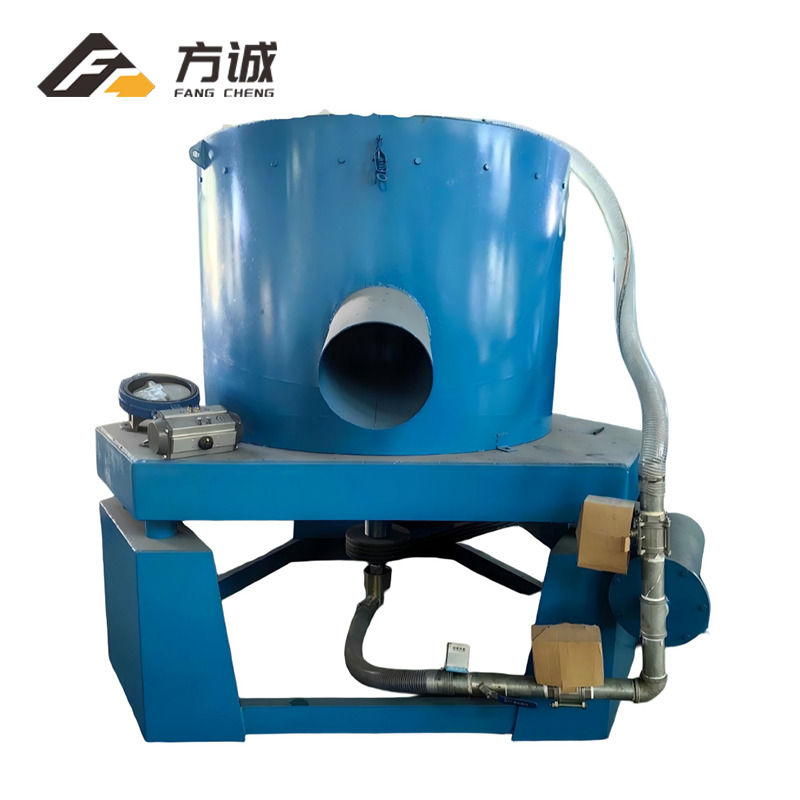
However, sluices will lose fine gold. Micro and flaky gold particles stay suspended in turbulent water. For fine gold, the circuit must integrate a fine gold concentrator. These centrifugal concentrators capture particles down to 50 microns. They use enhanced G-forces to pin fine gold against the bowl walls. They capture values traditional sluices miss completely.
Primary gravity equipment produces a rough concentrate. This concentrate still contains lots of heavy black sands. When black sands are dense, primary concentrates require careful finishing. You cannot sell raw black sand.
Integrate a gold shaking table into your final recovery stage. A shaking table cleanly separates fine gold from high-density heavy mineral sands. It uses a specific bumping action and a thin water film. This method upgrades your concentrate to a smeltable product cleanly. It achieves this without using mercury or toxic chemicals. It keeps your operation environmentally safe and highly profitable.
Even with the right equipment, external factors can halt your operation. You must plan for infrastructure constraints, scaling challenges, and regulatory requirements. Overlooking these elements causes massive project delays.
Placer circuits are heavily water-dependent. You must assess site water availability immediately. Evaluate your settling pond requirements based on your clay content. High-clay ores keep water muddy for weeks. You might need chemical flocculants to settle suspended solids quickly. In arid environments, you must integrate water recycling systems. Thickening equipment recovers clean water for reuse. Without a reliable water strategy, your wash plant cannot run.
Throughput scalability is another vital factor. Design your circuits modularly. Deposit grades fluctuate naturally over time. If the deposit grade drops, you must process more dirt to maintain revenue. The plant must scale up TPH efficiently. You want to add a second processing module without requiring a total redesign. Modular designs give you ultimate operational flexibility.
Environmental and safety compliance remains non-negotiable. Address your local tailings discharge regulations early. Understand your site reclamation standards before you dig the first trench. Occupational safety also requires strict adherence. Follow standard mining safety protocols for equipment guarding. Secure all belts, pulleys, and trommel drives. Implement strict water management safety protocols to prevent pond breaches. Regulators will shut you down if you ignore these standards.
Moving from concept to production requires a structured evaluation process. Never rush into equipment purchases based on theoretical estimates. Follow these three phases to derisk your investment completely.
During the vendor evaluation phase, always demand transparency. Ask them how their equipment handles your specific clay index. Request case studies from operations with similar black sand profiles. Strong vendors welcome rigorous technical questions.
The foundation of a profitable placer gold mining operation roots itself in skeptical, evidence-based ore testing. Guesswork destroys mining budgets. Real data builds sustainable, highly profitable operations. You must understand your ground completely before ordering steel.
Matching the specific clay content, PSD, and heavy mineral profile to the exact combination of scrubbers, concentrators, and shaking tables remains critical. It is the only reliable way to derisk your capital investment. Conduct your bulk sampling. Run your lab tests. Demand customized circuit designs. By following these steps, you secure high recovery rates and long-term operational success.
A: Any sticky clay that forms agglomerates is too much for a bare sluice. Sticky clay acts as a gold thief. It rolls through the riffles, physically trapping fine gold and carrying it to the tailings pile. If your ore contains cohesive clays, you must install a trommel scrubber before the sluice to completely break down the material first.
A: No, they are usually complementary. Sluices efficiently handle high-volume, coarse bulk material. Centrifugal fine gold concentrators act as highly effective scavengers or fine-gold primary units. Sluices catch the nuggets and coarse flakes, while centrifugal machines recover the micro-gold (down to 50 microns) that washes out of the sluice.
A: Effective gravity separation generally requires a water-to-solids ratio between 3:1 and 5:1. High-clay ores may push this closer to 8:1 for proper scrubbing. Because of this high demand, installing water recycling systems and settling ponds is almost always required to sustain operations in modern placer mining.
A: You extract a representative bulk sample from multiple depths across your deposit. Send this sample to an equipment manufacturer's testing lab or an independent metallurgical facility. They will perform a flow-sheet feasibility test, simulating scrubbing, sizing, and gravity separation to determine the exact equipment needed for maximum recovery.