Views: 0 Author: Site Editor Publish Time: 2026-09-23 Origin: Site
Clay is a notorious enemy in alluvial mining operations. Sticky, unbroken clay balls act as "robber clay" during processing. They grab hold of fine gold particles and carry them directly into your tailings pond. You lose valuable material instantly. Standard, off-the-shelf gravity recovery setups routinely fail in clay-rich deposits. These basic systems lack the aggressive pre-washing and disintegration capabilities needed for sticky ores. You must break apart the clay entirely before any recovery can begin. Our objective here is clear. We will outline how you can select the right combination of scrubbing, washing, and concentrating equipment. You will learn how to liberate gold from heavy clay effectively. We will show you how to maximize recovery rates and protect your capital expenditure. Processing clay demands a specific, staged approach. Let us explore the exact equipment configurations you need to turn frustrating clay deposits into highly profitable mining operations.
Mining operations often severely underestimate the financial impact of poor clay disintegration. The business problem is massive. Operators routinely experience up to 40-60% gold loss due to the "balling effect." As raw gravel and clay tumble through basic screening equipment, the clay forms dense, sticky spheres. These spheres act like sponges. They pick up liberated gold flakes and nuggets along the way. Because these clay balls are large, standard screens reject them as oversized waste. The system ejects them straight into the tailings pile. You literally throw away your profit.
The technical hurdle lies in the physical properties of clay itself. Clay exhibits extremely high plasticity and viscosity. Standard vibrating screens rely on dry or semi-wet vibration to stratify material. Sticky clay completely blinds these screens. It plugs the mesh openings within minutes. Furthermore, when clay mixes poorly into water, it creates a thick, muddy slurry. This high-density fluid chokes basic sluice boxes. Gold particles cannot sink through thick mud. They simply ride the dense current out of the system.
To overcome this, you must define strict success criteria for your processing circuit. The primary goal of your upfront equipment must be 100% liberation. You must separate every particle of clay from the gold-bearing gravel. You must achieve this total breakdown before the material ever reaches the recovery stage. If you try to wash and recover simultaneously in heavy clay, you will fail. Disintegration must happen first. Gravity separation comes second. This requires specific placer gold mining equipment designed for violent mechanical agitation.
You cannot treat sticky ores using standard classification methods. When you encounter high plasticity in your deposit, a purpose-built placer gold wash plant becomes your most vital asset. The design of this plant dictates your entire recovery rate. We must compare standard solutions against heavy-duty alternatives to understand the difference.
Standard trommel screens simply sort material by size. They gently tumble the ore while spraying it. This works fine for loose, sandy gravel. It does absolutely nothing to break down dense clay. Heavy-duty Trommel Scrubbers or Rotary Scrubbers solve this problem. These machines feature a solid steel washing cylinder preceding the screen section. Inside this solid drum, aggressive lifter bars lift and drop the rocks. The rocks themselves act as a grinding media. They smash into the clay balls repeatedly. This violent churning action destroys the sticky matrix.
Retention time is critical here. A trommel scrubber holds the material longer than a standard screen. It pairs this extended retention with high-pressure water injection. The combination of mechanical smashing and high-pressure washing dissolves the clay into a liquid slurry. For extreme scenarios involving highly plastic, solid clay beds, log washers provide an alternative. Log washers use twin rotating shafts with interlocking paddles. They slice through the toughest clay like a blender, though they require significant power.
Water-to-solids ratio forms the most important evaluation dimension. Buyers must account for massive water volume requirements. Operating a wash plant in heavy clay often demands 3:1 or even 4:1 water-to-solids ratios by weight. You cannot just sprinkle water on clay. You must flood it to dilute the resulting slurry.
Equipment Comparison for Clay Disintegration
| Feature | Standard Trommel Screen | Heavy-Duty Trommel Scrubber |
|---|---|---|
| Primary Function | Size classification | Aggressive washing and disintegration |
| Drum Design | Fully perforated mesh/punch plate | Solid steel washing section, then screen |
| Internal Components | Small spirals to push material | Heavy lifter bars for lifting/dropping rocks |
| Clay Handling | Fails on sticky clay (blinding occurs) | Excellent for medium-to-heavy clay |
| Water Requirement | Low to Moderate | Extremely High (3:1 to 4:1 ratio) |
Once your scrubber destroys the clay, the material transforms into a suspended slurry. This liquid mixture now flows toward the recovery circuit. The first line of defense is your sluice box. You must capture the coarse gold immediately. However, clay fundamentally changes how water behaves.
Clay-heavy water is significantly denser and more viscous than clear water. The specific gravity of the fluid increases. This physical change creates massive problems for gravity separation. Buoyancy increases in a thick slurry. Gold particles sink much slower. If the water moves too fast, it easily sweeps gold out of standard riffles. Therefore, you must design your circuit specifically for clay suspensions.
We advise selecting much wider sluice boxes than you would use for clean gravel. A wider box spreads the slurry out into a thinner sheet. This naturally slows down the velocity of the water. Decreasing velocity gives the gold more time to overcome the fluid's viscosity. The particles can finally settle out of the thick suspension.
Matting and riffle selection require careful attention. Do not use shallow, flat riffles. We recommend aggressive angle iron riffles for clay slurries. You need a properly configured placer gold sluice to generate strong fluid dynamics. Steep angle iron creates powerful, deep vortexes behind each riffle. These vortexes actively pull gold particles down through the dense slurry. Combine this with specialized miners moss beneath the riffles. The moss provides deep, calm pockets where the gold can lock in safely, protected from the dragging force of the viscous clay water.
Even with the best sluice box, you will miss a portion of your target. Clay deposits frequently host highly liberated, ultra-fine gold. This flour gold is too light and flat to settle in a sluice box when fighting high-viscosity water. If you stop at the sluice, you leave significant money on the table.
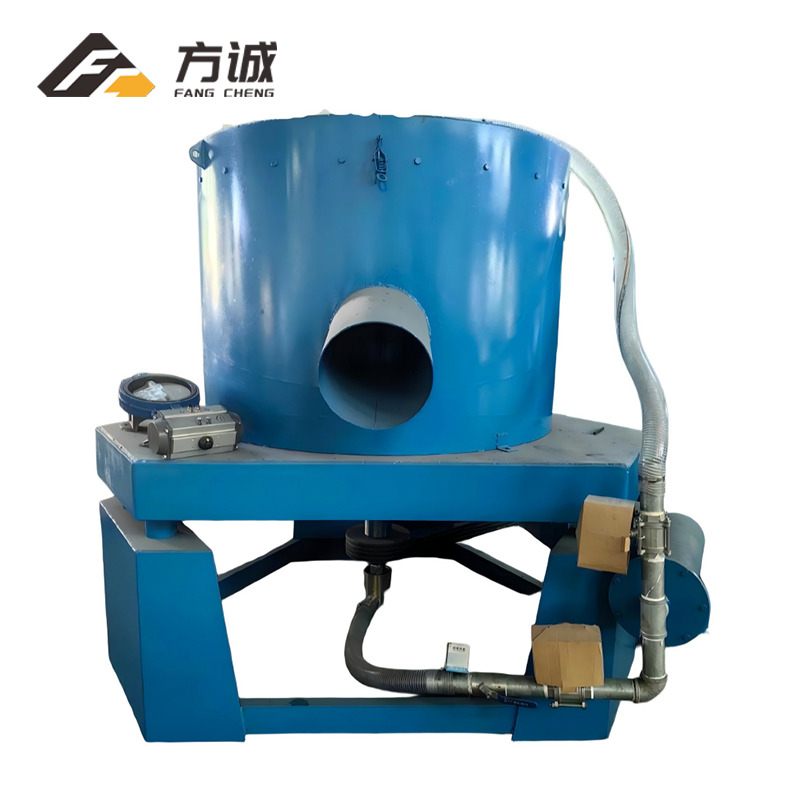
You must capture these fines to maximize your yield. The centrifugal fine gold concentrator serves as your primary solution here. This machine targets sub-1mm particles directly from the classified slurry. It works by applying massive G-force. While a sluice relies on 1G of natural gravity, a concentrator applies upwards of 60G. This extreme force overcomes the high specific gravity and viscosity of the clay-heavy water. It pins the heaviest microscopic gold particles into the spinning bowl's ribbed walls, allowing the lighter clay mud to wash away.
After you capture these high-grade concentrates, you need final concentration. The concentrates from your centrifugal bowl or sluice box still contain heavy black sands and other minerals. You must position the gold shaking table as your ultimate finishing tool. This machine separates the pure gold from the remaining heavy minerals using precision vibrations and thin-film water flow.
To implement this upgrade circuit, follow a strict multi-stage recovery process:
This exact progression provides a clear ROI path. It ensures you recover the invisible fine gold that traditional miners often abandon in clay deposits.
Procuring equipment for clay-rich deposits requires a skeptical approach to manufacturer specifications. Many operators make critical sizing errors. You must balance throughput against retention time. We strongly warn against overestimating your actual Tons Per Hour (TPH) capabilities.
Manufacturers base their standard TPH ratings on ideal, loose gravel. Heavy clay completely alters these metrics. Because clay requires longer retention times in the scrubber to break down, it slows your feed rate. Buyers must often purchase a larger capacity machine than their target TPH suggests. If you want to process 100 TPH of heavy clay, you likely need a scrubber rated for 150 to 200 TPH of standard gravel. Undersizing the scrubber causes operators to push material through too fast, resulting in unbroken clay balls and severe gold loss.
Scalability and modularity offer massive advantages. Clay content fluctuates wildly within a single deposit. We recommend modular, skid-mounted, or easily configurable equipment. This flexibility allows operators to adjust the circuit as conditions change. You can add extra scrubbers or adjust screen sizes without rebuilding the entire plant.
You must also plan for severe implementation risks. The biggest risk is insufficient water supply. Clay demands massive water volumes. Additionally, you face complex tailings management. Clay particles are incredibly fine. They suspend in water for a very long time. They settle very slowly in settling ponds. You need vast pond acreage or chemical flocculants to clean your water for recirculation.
Successful recovery in clay deposits requires a strict two-step battle. You must execute aggressive washing first, followed by precision gravity recovery second. Attempting to combine these steps always results in catastrophic gold loss. The "balling effect" will rob you blind if you do not implement severe mechanical agitation.
As a final skeptical check, remember that no single "miracle machine" solves clay. Effective mining requires a scientifically sequenced circuit. A scrubber breaks the clay. A wide sluice catches the coarse flakes. A centrifugal machine grabs the fines. A shaking table finishes the product.
Take action before you spend your capital. Demand proper metallurgical testing of your ore. We encourage you to consult with an extraction engineer or an experienced equipment manufacturer. They can help you design a site-specific flowsheet based entirely on your exact ore characteristics and your true water availability.
A: No. Dry washing is entirely ineffective for clay. Clay's high plasticity binds particles tightly together. High-pressure water and extreme mechanical scrubbing are absolutely mandatory to dissolve the bonds and achieve full liberation of the gold.
A: Standard trommels only classify material by sorting it through a screen. Trommel scrubbers feature a solid steel washing cylinder equipped with internal agitation paddles. This breaks down and dissolves sticky clay completely before the material ever reaches the classification screen.
A: Expect to use roughly 3 to 5 times the volume of the solid material being processed. This massive 3:1 or 4:1 ratio highlights the absolute necessity for high-capacity water pumps and exceptionally large settling ponds to manage the muddy tailings.
A: Clay drastically increases the density and viscosity of your processing water. This thick slurry prevents fine gold particles from sinking and settling into the riffles. Overcoming this requires slowing the slurry velocity and using a fine gold concentrator to apply intense centrifugal force.