Views: 0 Author: Site Editor Publish Time: 2026-09-08 Origin: Site
Cassiterite is an inherently brittle mineral. During the comminution phase, it remains highly susceptible to over-grinding. Operators frequently generate "tin slimes" during this crushing process. These ultra-fine particles easily escape traditional recovery circuits. They inevitably end up in discarded tailings.
Discarded tailings often contain economically viable grades of tin. You lose significant revenue when these fine particles wash away. Recovering this lost revenue requires specialized secondary processing circuits. Ignoring these tailings leaves immense untapped value behind.
This article provides a practical, evidence-based framework. We specifically target mine operators, metallurgists, and procurement managers. You will learn how to evaluate and select the right tin mining equipment. We will show you how to intercept fine cassiterite effectively. Following these guidelines helps you optimize overall plant recovery and maximize mineral yield.
Cassiterite loss is primarily driven by particle size mismatch; equipment must be explicitly matched to the target size fraction of the tailings.
Tin gravity separation equipment remains the most cost-effective foundation for tailings recovery due to cassiterite’s high specific gravity (6.8–7.1).
A multi-stage approach—utilizing spirals for roughing, jigs for coarser fractions, and shaking tables for cleaning—yields the highest verified recovery rates.
Procurement should be preceded by rigorous mineralogical analysis and pilot-scale testing, not just nameplate capacity claims.
Understanding why cassiterite enters the tailings stream requires examining the physical realities of mineral processing. You cannot fix a recovery problem until you isolate its structural origin.
Plant operators face a constant battle. To achieve adequate liberation, ores are often ground extensively. This aggressive grinding forces cassiterite to fracture into fines. Particles frequently drop below 20 microns. Once ground this fine, the mineral behaves more like a liquid suspension than a solid particle.
Ultra-fine tin particles lack significant physical mass. This lack of mass prevents them from overcoming water flow velocity. Standard primary separation circuits use strong water currents. These currents simply sweep the ultra-fine tin particles away. The water viscosity overpowers the gravitational pull on the tiny cassiterite grains. Consequently, they float directly into the tailings overflow.
Tailings rarely contain isolated cassiterite. You will typically find heavy gangue minerals present. Iron oxides like hematite or magnetite frequently complicate the separation process. Their presence drastically reduces the density differential between target minerals and waste. This confusion causes standard gravity circuits to misclassify valuable tin as waste material.
Recovering lost cassiterite changes the financial trajectory of a processing plant. Incremental reductions in tailings loss generate pure profit. A simple 2-5% increase in overall recovery translates directly to your bottom line. You achieve this revenue boost without incurring any additional primary mining costs. Tailings processing represents a massive, low-risk revenue opportunity.
Cassiterite holds a significant natural advantage. It is exceptionally heavier than most common gangue minerals like quartz or feldspar. Because of this high specific gravity, operators favor physical separation. Installing tin gravity separation equipment provides the primary, lowest-OPEX method for tailings recovery. It avoids expensive chemical reagents entirely.
You must efficiently manage massive volumes of low-grade material in the first stage. This requirement makes the tin ore spiral chute incredibly valuable.
Role in Tailings: It is ideal for bulk, low-grade tailings roughing. It acts as the primary defense against massive mineral loss.
Operational Reality: It handles high throughput effortlessly. It features a remarkably small footprint. It boasts zero moving parts, ensuring ultra-low maintenance requirements.
Limitations: It becomes entirely ineffective for ultra-fine slimes below 0.03mm. It cannot produce a final, smeltable grade on its own. You must pair it with downstream cleaning equipment.
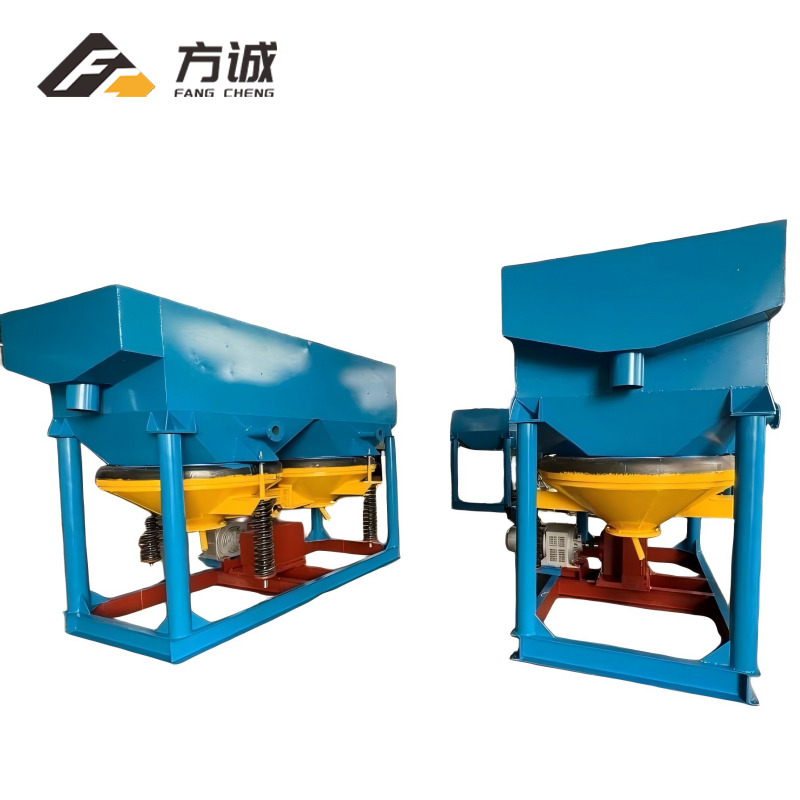
Some tailings streams retain larger unliberated particles. If your waste stream runs coarse, a tin ore jig concentrator handles this challenge well.
Role in Tailings: It performs best if tailings contain coarser tin particles ranging from 0.5mm to 2mm. It also serves as a robust pre-concentration step. This reduces the heavy mineral load on downstream circuits.
Operational Reality: It uses a vertically pulsating water bed. This pulsation stratifies minerals strictly by density. Operators require precise tuning of the stroke length and frequency.
Limitations: It demands high water consumption. It remains highly inappropriate for processing fine slimes. Pulsating water simply washes ultra-fine cassiterite away.
To finalize the separation process, you need precision. The tin ore shaking table provides unmatched accuracy.
Role in Tailings: It serves as the definitive choice for cleaning low-grade concentrates. It effectively captures fine and ultra-fine cassiterite down to 0.02mm. It primarily processes spiral chute underflow.
Operational Reality: It delivers the highest concentration ratio of any gravity equipment. It allows operators to produce a final, market-ready concentrate directly from waste tailings.
Limitations: It possesses a low throughput capacity per unit. It requires significant floor space for installation. It often acts as the primary bottleneck in a tailings reprocessing plant.
Sometimes, physical density differences fall short. Certain mineralogical profiles require you to move beyond basic gravity separation.
Many tailings piles are heavily contaminated with iron minerals like magnetite or hematite. When this happens, gravity alone fails completely. The densities of iron and tin are too similar. High-gradient magnetic separators (HGMS) must be introduced into the circuit. These powerful machines pull magnetic gangue away. They leave the non-magnetic cassiterite behind. This step ensures your final concentrate meets stringent smelter purity requirements.
Tailings often contain ultra-fine slimes smaller than 10 microns. At this microscopic scale, physical mass becomes completely negligible. Gravity cannot pull these particles down. Specialized froth flotation becomes mandatory. This process uses complex chemical collectors like phosphonic acids or hydroxamates. The chemicals attach to tin particles and float them to the surface. However, this approach significantly increases chemical operating expenses. It also introduces severe environmental compliance burdens.
Selecting the right machinery determines your operational success. You cannot guess which equipment will work. You must rely on hard metallurgical data.
This is the non-negotiable first step in plant design. Equipment must align perfectly with the specific size fraction of your tailings. If you ignore PSD, you will lose money.
Rule of Thumb: Choose jigs for coarse material. Select spirals for mid-range particles. Rely on tables or flotation for ultra-fines.
Equipment Type | Optimal Particle Size Range | Primary Application Role |
|---|---|---|
Jig Concentrator | 0.5mm – 2.0mm | Pre-concentration / Coarse Tailings |
Spiral Chute | 0.03mm – 1.0mm | High-volume Roughing |
Shaking Table | 0.02mm – 0.5mm | Precision Cleaning |
Froth Flotation | Under 0.02mm (20 microns) | Ultra-fine Slimes Recovery |
You must rigorously evaluate the physical space available in your plant. Shaking tables require massive floor space to process high-volume tailings. They spread out horizontally. Conversely, spirals utilize vertical space efficiently. You can stack them high in compact structures. Plan your factory layout before purchasing any units.
Gravity circuits remain notoriously water-intensive. Pumping large volumes of water requires substantial electrical power. Assess the efficiency of your plant's water recovery systems. Check your thickening circuits thoroughly. You must guarantee an adequate water supply before adding new jigs or tables to your flow sheet.
The mining industry features many unreliable vendors. Look for vendors who require bulk sample testing before quoting a price. Avoid manufacturers who guarantee theoretical recovery rates based purely on input capacity. Real-world testing proves actual equipment viability. Trust data, not empty sales promises.
Deploying new equipment introduces complex integration challenges. Anticipating these hurdles prevents catastrophic startup delays.
Tailings frequently contain high clay content. Clay rapidly increases pulp viscosity in the water stream. Thick, viscous mud renders gravity separation completely useless. Heavy tin particles cannot sink through thick clay. You must install desliming cyclones. These cyclones remove clay before the material reaches the processing equipment. Clean water flow is mandatory for success.
Gravity machines are not autonomous. Shaking tables and jigs require highly skilled operators. These operators must continuously adjust wash water, stroke length, and deck tilt. Tailings feed grades fluctuate hourly. Your operators must react instantly to these changes. Poorly trained staff will send valuable tin right back into the waste dump.
You cannot simply plug new machines into an old plant. Piping, pumping, and routing tailings require extensive engineering. Moving material from an existing active circuit into a new recovery plant takes time. It requires carefully planned downtime. You must maintain rigorous metallurgical accounting throughout this process. Accurate accounting proves the true return on investment to your stakeholders.
Process Stage | Recommended Equipment | Target Operational Goal |
|---|---|---|
1. Desliming | Hydrocyclones | Remove viscosity-increasing clay and ultra-fines |
2. Roughing | Spiral Chutes | Discard bulk gangue rapidly with low OPEX |
3. Cleaning | Shaking Tables | Upgrade rougher concentrate to smeltable grade |
4. Scavenging | Flotation Cells | Capture remaining sub-20-micron cassiterite |
Reducing cassiterite loss is not about finding a single "magic bullet" machine. Success requires architecting a meticulously designed cascading circuit. You must chain Spirals, Tables, and Flotation units together logically. This circuit must be tailored specifically to the unique mineralogy of your waste stream.
Do not rush your procurement process. Before issuing a purchase order for new machinery, take measured steps. Commission a comprehensive mineralogical analysis using advanced tools like QEMSCAN. Run a pilot-scale metallurgical test on a truly representative tailings sample. Base your final equipment decisions on verifiable scientific evidence, not assumptions.
A: Generally, physical gravity recovery drops off sharply below 20–30 microns. At this microscopic scale, water viscosity overpowers the mineral's mass. When gravity fails, you must introduce froth flotation or specialized centrifugal concentrators to capture these ultra-fine particles.
A: No. Jigs rely on aggressive vertical water pulsation to stratify minerals. This intense water movement easily washes away ultra-fine particles. Jigs are strictly designed for handling coarser mineral fractions between 0.5mm and 2mm.
A: It is highly dependent on tailings grade and current tin market prices. However, well-designed gravity circuits often see an ROI within 12–18 months. This rapid return occurs due to inherently low operating costs compared to traditional primary mining operations.