Views: 0 Author: Site Editor Publish Time: 2026-09-15 Origin: Site
Processing cassiterite presents a notorious metallurgical challenge for plant operators worldwide. Its exceptionally high specific gravity makes it an ideal candidate for gravity separation. However, its extreme friability often leads to over-grinding, severe sliming, and devastatingly high fine-tin losses. Plant managers face intense pressure to fix these daily processing inefficiencies. When evaluating new solutions, your decision is rarely just about replacing old machinery. You must identify exactly which processing stage leaks the most profitability. Evaluating upfront, intermediate, and final cleaning circuits properly will help you stabilize recovery rates and optimize capital expenditure. In this article, we outline a bottom-line-focused framework for circuit evaluation. You will learn how to assess primary gangue rejection, mid-stage scavenging, and final concentration stages effectively. We will also explore why holistic system integration ultimately matters far more than individual machine specifications. Let us dive into the critical stages determining your overall mineral yield.
Prevention of over-grinding is critical: Upfront equipment must reject gangue early to prevent tin from turning into unrecoverable slimes.
Jigs handle the heavy lifting: Primary concentration relies on jigs to process high-volume, coarse material cost-effectively.
Spirals bridge the gap: Mid-stage recovery relies on spirals to manage fluctuating feed densities with minimal operational expenditure (OpEx).
Shaking tables dictate final grade: The profitability of the final concentrate heavily depends on the deck tuning and stroke precision of the shaking tables.
System integration outranks individual specs: Isolated equipment upgrades fail without a metallurgically tested, cohesive gravity circuit.
Plant operators must first define what stable recovery actually looks like in practice. Success means maximizing concentrate grade without sacrificing overall mineral yield. You also want to minimize fresh water consumption during ongoing operations. Achieving this delicate balance defines true operational success for modern plants.
The biggest enemy in this process is the sliming threat. Cassiterite possesses a high specific gravity, usually between 6.8 and 7.1. However, the mineral is highly brittle by nature. It breaks down very easily during aggressive crushing and grinding stages. If operators over-grind the ore, the tin quickly turns into ultra-fine slimes. These slimes become incredibly difficult to capture using standard gravity methods. Therefore, your primary directive is always capturing tin as early and as coarse as physically possible.
Deposit types drastically change how we evaluate recovery equipment. Alluvial deposits require far less comminution effort upfront. Nature has already liberated the heavy minerals over millions of years. Hard rock deposits, conversely, demand strict classification before ever hitting the gravity stages. Any misstep in the grinding circuit directly impacts downstream efficiency.
Common Mistake: Operators often push primary crushers too hard to increase daily throughput. This approach shatters the brittle cassiterite crystals prematurely, creating unrecoverable slimes.
Best Practice: Operators should utilize rod mills rather than ball mills for primary grinding. Rod mills produce a much narrower particle size distribution, heavily reducing over-grinding risks.
We must match the recovery strategy to the geological realities of the ore body. Failure to adapt to deposit characteristics guarantees poor recovery outcomes.
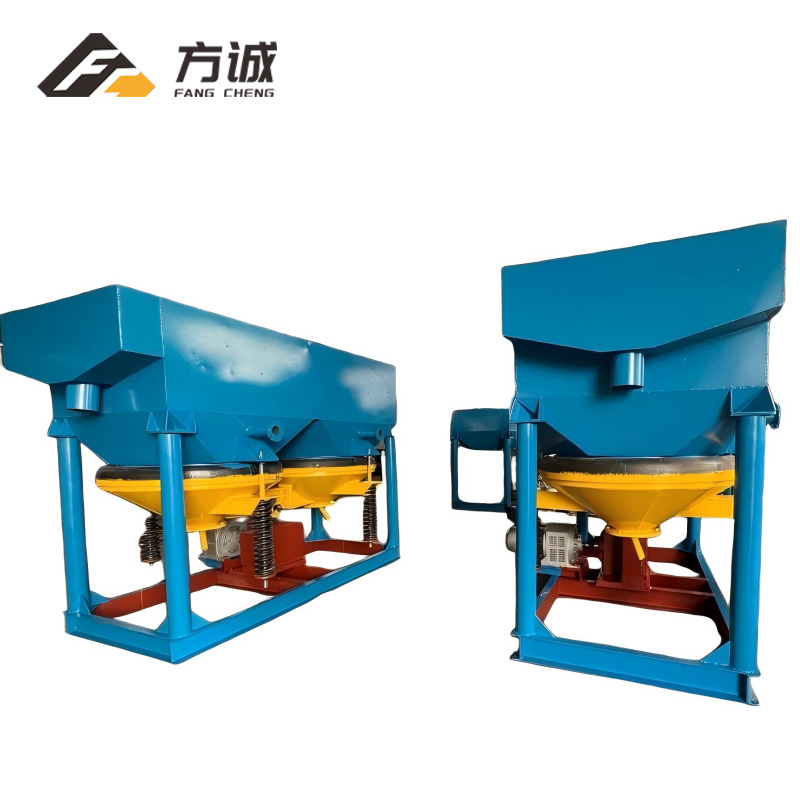
Primary concentration acts as the heavy-duty roughing stage of your plant. It discards massive amounts of light gangue minerals early on. This rapid rejection drastically reduces the tonnage load placed on downstream machinery. To accomplish this, plants typically deploy a highly efficient tin ore jig concentrator.
When evaluating primary jigs, consider several highly specific operational dimensions:
Throughput vs. Water Use: You must assess make-up water requirements carefully. Pulsation efficiency determines how well the jig stratifies the mineral bed without wasting precious water.
Stroke and Frequency Adjustability: Operators need simple, responsive control systems. They must tune the jig quickly to handle varying feed grades and fluctuating particle sizes.
Screen Bed Maintenance: Hutch and screen mechanisms face harsh wear continuously. Frequent downtime for screen replacements destroys your daily processing margins.
You also face a major implementation risk during this initial stage. Poor desliming prior to the jig will cause severe operational issues. Heavy clays and ultra-fine slimes can quickly blind the jig bed. A blinded bed halts all mineral stratification immediately. This scenario kills recovery rates completely, sending coarse tin directly into the tailings flow.
Best Practice: Always install a hydrocyclone or a specialized desliming cone before feeding material into your jig circuit. Clean feed guarantees crisp stratification and maximizes gangue rejection.
Mid-stage processing bridges the complex gap between roughing and final cleaning. It focuses heavily on scavenging and intermediate mineral upgrading. Plants use this stage to treat finer fractions escaping the primary jigs. The most reliable tool for this job is the tin ore spiral chute.
We evaluate spirals based on three main operational dimensions:
Operational Stability: Spirals feature zero moving parts in their core design. This simplicity guarantees near-zero mechanical maintenance and extremely low power consumption over time.
Footprint to Capacity Ratio: You gain high throughput inside a minimal physical floor space. Vertical stacking allows massive scalability for rapidly expanding plants.
Profile Geometry: Pitch and trough profiles must physically match your ore. The specific particle size distribution dictates the ideal spiral shape for optimal recovery.
Despite their mechanical simplicity, spirals carry a distinct implementation risk. They remain highly sensitive to feed density fluctuations. You must control the incoming slurry density strictly. The ideal operating range usually sits tightly between 25% and 35% solids by weight. If the density drops or spikes unpredictably, separation efficiency falls sharply. Operators will struggle to maintain clean separation bands on the trough surface.
Common Mistake: Feeding spirals with wildly varying water volumes. Operators must install automatic density control valves on feed tanks to maintain the required solids ratio consistently.
The final cleaning stage demands absolute precision from your installed equipment. This step upgrades the rough concentrate from jigs and spirals into a commercially viable product. You need a high-grade final concentrate to maximize your smelting revenue. The primary workhorse here is the tin ore shaking table.
Evaluate this crucial final stage using specific performance criteria:
Deck Material and Riffling Design: Plants often choose between fiber-glass and rubber-lined decks. The specific riffle patterns dictate how well the table handles ultra-fine cassiterite.
Asymmetric Motion Mechanics: The eccentric head motion must remain highly reliable. This mechanism ensures the sharp, physical separation of heavy tin from lighter middlings and tailings.
Tuning Complexity: Operators require specialized skills to run this equipment. They must adjust table tilt, water wash, and stroke length in real-time to match feed changes.
The biggest implementation risk involves overall plant capacity constraints. Shaking tables offer notoriously low throughput per individual unit. Scaling up your final cleaning circuit requires significant floor space. You will also need complex launder distribution networks to feed dozens of tables evenly. Poor feed distribution ruins the efficiency of an entire shaking table network.
Best Practice: Group shaking tables into dedicated roughing, cleaning, and scavenging banks. Never expect a single pass on one table to yield a premium commercial grade without generating recirculating loads.
System integration always outranks isolated equipment specifications. Buying top-tier individual machines often fails if the classification between stages is poor. Gravity devices separate minerals by both size and density simultaneously. Therefore, tight hydraulic sizing before routing material to any tin gravity separation equipment is absolutely mandatory.
Hydraulic sizing plays a vital role in preventing severe mineral losses. You must utilize hydrocyclones or hydraulic classifiers prior to the separation stages. Sending a wide size distribution to a single gravity machine ruins separation efficiency. Coarse gangue easily displaces fine tin particles on the equipment surface. This physical displacement sends valuable minerals straight to the tailings launder.
Plant architecture must also address long-term scalability and strict environmental compliance. Modern mining facilities face tight physical footprint constraints constantly. You must plan for efficient tailings management and robust water recycling capabilities. Closed-loop water systems help maintain environmental compliance while heavily reducing operational expenditures. Reliable tin mining equipment setups depend on clean, recycled water to function optimally day after day.
Best Practice: Implement a closed-loop water circuit utilizing deep-cone thickeners and filter presses. This setup guarantees a steady supply of clean wash water for your critical gravity devices.
To illustrate how these stages integrate properly, review the capability breakdown below.
Stage Capability and Resource Breakdown
Processing Stage | Primary Objective | Target Particle Size Range | Relative Water Usage Rate |
|---|---|---|---|
Primary Roughing (Jigs) | Aggressive, early gangue rejection | 2mm up to 20mm | High (Requires constant make-up) |
Mid-Stage (Spirals) | Intermediate scavenging of fines | 0.1mm up to 2mm | Medium (Managed via slurry density) |
Final Cleaning (Tables) | Absolute grade maximization | Below 2mm | Low per unit (High cumulative) |
Procurement teams must demand strict, evidence-based selection processes. Never buy machinery based solely on theoretical capacity charts from sales brochures. You should require detailed metallurgical bench tests on your specific ore sample. If possible, run pilot plant trials before signing any massive purchase orders. Ore characteristics vary wildly between different geological deposits.
Vendor evaluation extends far beyond the initial equipment sale. Assess your potential suppliers based on aftermarket support and rapid spare parts availability. You will frequently need replacement shaking table head motions and customized jig valves. Choose manufacturing partners with a proven, documented deployment history in ore bodies similar to yours.
Common Mistake: Selecting vendors based purely on the lowest initial capital cost. This completely ignores the long-term financial drain of poor metallurgical recovery and frequent mechanical breakdowns.
Finally, conduct a strict return on investment (ROI) calculation. Balance the upfront capital expenditure of premium equipment against long-term operational costs. Factor in wear parts consumption, overall power draw, and fresh water usage. Most importantly, calculate the massive financial impact of just a 2% to 3% increase in final tin recovery. A slightly higher initial investment usually pays for itself within mere months of operation.
Achieving stable tin recovery requires a deeply integrated, staged processing plan. You need jigs for rapid, early gangue rejection. You rely on spirals for low-cost, continuous intermediate processing. Finally, you depend on shaking tables for high-value final concentrate cleaning. Every single stage plays a highly specific role in capturing maximum profit for your operation.
The final verdict for plant operators is clear. The most critical stage isn't one specific standalone machine. Instead, it is the strict sizing and classification occurring systematically between these gravity stages. Poor classification ruins even the most advanced separation machinery on the market.
Your next step is highly straightforward. We advise readers to initiate a comprehensive metallurgical audit of their current flow sheet immediately. Identify your highest mineral loss points before releasing any requests for proposals (RFPs) for new machinery. Data-driven audits ensure you purchase the exact equipment needed to plug your daily profit leaks permanently.
A: Coarse jigs typically handle particle sizes ranging from 2mm up to 20mm. Specialized fine jigs can process material down to 0.5mm. It is critical to avoid sending excessive fines or slimes into the jig, as they will blind the bed and drastically reduce overall recovery efficiency.
A: Standard spirals generally lose their separation efficiency when processing particles below 0.1mm. To handle ultra-fine tin particles effectively, you must deploy specialized fine-mineral spirals. In many cases, operators incorporate centrifugal concentrators to capture the ultra-fines that conventional spirals leave behind.
A: The two most common culprits are poor feed sizing and incorrect tuning. Mixing coarse gangue with fine tin disrupts bed stratification, causing the heavy fines to wash away. Alternatively, operators may be using incorrect wash water volumes or improper deck tilt settings for the specific feed grade.
A: While gravity separation forms the core of tin processing, it is rarely enough for complex ores. Many plants require magnetic separation to remove associated iron minerals. Others utilize flotation circuits to eliminate sulfide contaminants. These additional steps are often necessary to achieve a high-value commercial grade.