| Availability: | |
|---|---|
| Quantity: | |
Working Principle
The separation principle of the three-roller High Intensity magnetic separator primarily exploits the differing magnetic properties of various minerals to achieve separation.
Separation of strongly magnetic minerals: Material is uniformly fed via the hopper onto the first weak magnetic roller, removing strongly magnetic impurities such as iron.
Separation of Medium-Magnetic Minerals: Following preliminary separation, non-ferromagnetic material continues forward into the second medium-strength magnetic roller, primarily separating medium-magnetic minerals. Under this roller's magnetic field, medium-magnetic minerals are adsorbed and carried to the edge of the magnetic field before detaching into the corresponding collection trough, chiefly separating ilmenite.
Separation of weakly magnetic minerals: Following the first two magnetic separation stages, residual weakly magnetic minerals enter the third high-intensity magnetic roller (possessing the strongest magnetic field).
Under the influence of this potent magnetic field, weakly magnetic minerals such as monazite are adsorbed and separated, thereby achieving efficient recovery of weakly magnetic minerals like monazite.
Parameter adjustment and optimisation: By modifying parameters such as magnetic roller rotational speed, magnetic field strength, and feed rate, separation efficiency can be optimised to enhance mineral recovery rates and grade.
Advantages
![]() | ![]() | ![]() |
High-intensity magnetic separators are the upgrading products of dry separators developed on the basis of the original dry separators by improving the magnetic field strength and magnetic block arrangement. Its magnetic system is all made of high-performance rare-earth nd-fe-b material and high-quality ferrite material with high magnetic field strength (up to 12000 GAUSS). The high-intensity magnetic separator is suitable for wet magnetic separation of magnetite, pyrrhotite, roasted ore, and ilmenite with particle sizes less than 3mm, and removing iron from coal, non-metallic ore, building material, etc.
The magnetic system of the high-intensity magnetic separator is made of high-quality ferrite material or compound with rare earth magnetic steel. The average magnetic induction of the tube table is 100 ~ 600mT. According to user needs, can provide downstream, semi-countercurrent, and counter-current types, such as various strong magnetic separation tables. The magnetic separator has the advantages of a simple structure, large treatment capacity, convenient operation, and easy maintenance.
Application of Magnetic Separation: Removal of miscellaneous stones, improve the grade, achieve sales. The magnetic separation equipment separates weak magnetic Ferrous ore or slag, such as lean manganese ore, limonite, and hematite.
Technical Parameters
| 3 Roller Electrostatic Separator | |||
| Model | FC1000 | FC1200 | FC1500 |
| Roller Length(mm) | 1000 | 1200 | 1500 |
| Roller Diameter(mm) | 300/500 | 300/500 | 300/500 |
| Magnetic Intensity (GS) Adjustable | 1500/8000/18000 | 1500/8000/18000 | 1500/8000/18000 |
| Feeding Size(mm) | <2 | <2 | <2 |
| Capacity(tph) | 1-2 | 2-3 | 3-5 |
| Power(kw) | 1.5kw*3 | 1.5kw*3 | 1.5kw*3 |
| The technical parameters provided are for reference only. Final product performance shall be subject to the official technical specifications. | |||
Successful Cases
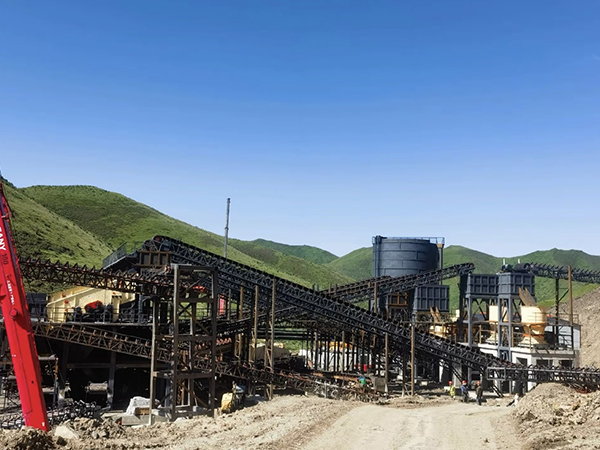
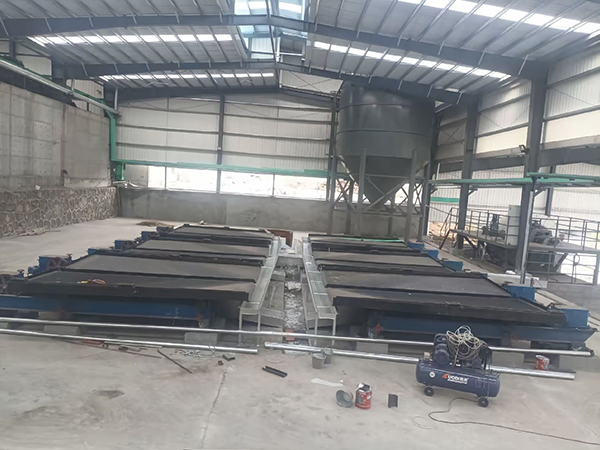
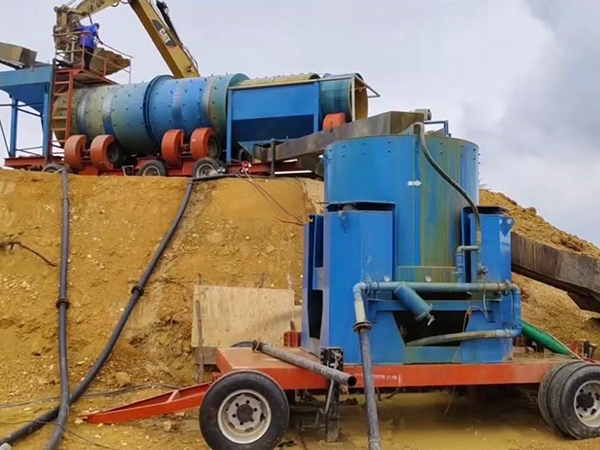
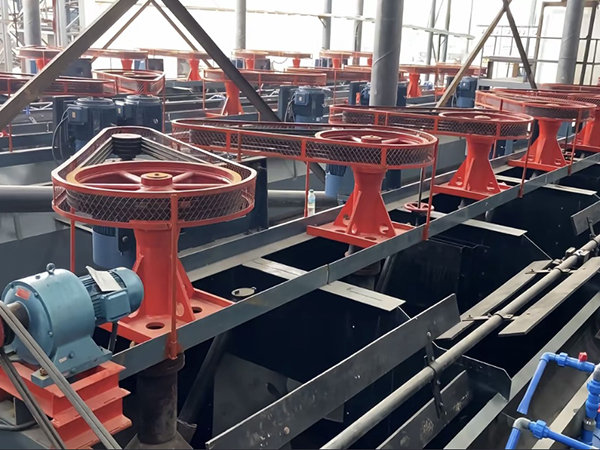
Rock Gold Mine - South Sudan | Placer Gold Mines - Zimbabwe | Chromite - South Africa |
Alluvial Chrome Ore - Zimbabwe | Alluvial Tin Mines - Bolivia | Rock Tin Mines - Indonesia |
Copper Oxide - Russia | Tantalum Niobium Ore - Nigeria | Lithium Mines - Brazil |
Kaolin Mine - Uganda | Lead Zinc Mine - Morocco | Manganese Ore - Kenya | Hematite - South America |
FAQ
Q: What minerals suit 3-roller dry magnetic separators best?
A: Ideal for weakly magnetic ores (W/Sn/Ta-Nb, 0.05-5mm), especially REE beneficiation in water-scarce areas.
Q: How to optimize 3-roller separator performance?
A: ①Adjust RPM(5-25) by particle size ②Set gradient field(8000-18000Gs) ③Keep feed layer<10mm.
Q: Advantages over single-disc models?
A: 30% better precision, produces 3-4 concentrates, 2x capacity, only 15% more power.